

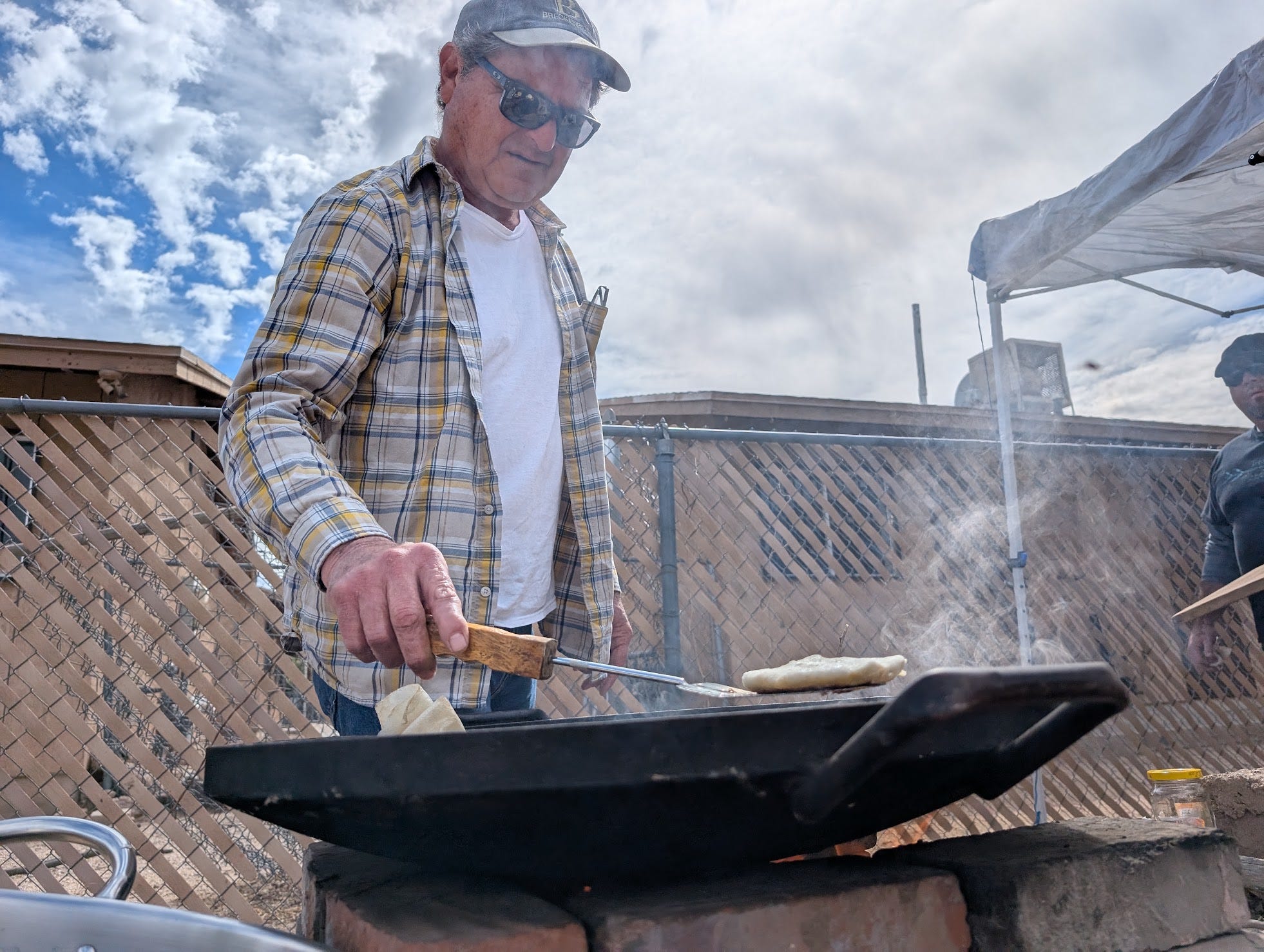
Barrio Buffelworks co-founder David Walker speaks with writer and folklorist Kimi Eisele about his vision for Tucson, and the community that’s making it happen, at the 53rd Tucson Meet Yourself, a three-day folklife festival in downtown Tucson, where David was also exhibiting buffelgrass adobe and educating the public.
Kimi Eisele
I'm here with my dear friend David Walker — teacher, dad, bike advocate, longtime natural builder, and visionary. David, let’s start at the beginning. What led you to think of buffelgrass as a building material?
David Walker
When I moved to Tucson three decades ago my friend Amy, who’s here today, told me about this invasive grass that's threatening native plants by fire and by outcompeting them.
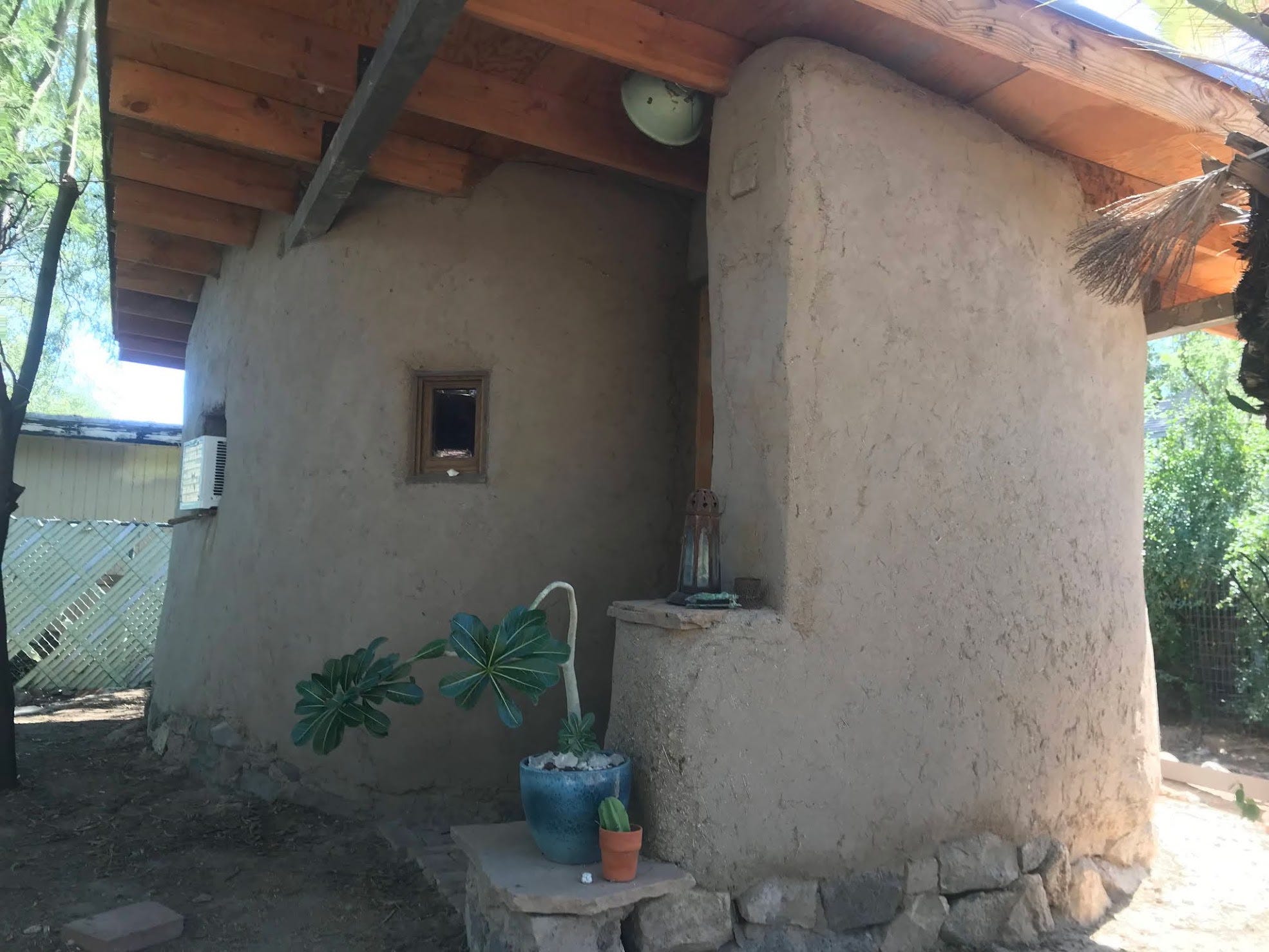
I started picking buffelgrass regularly. After a while I realized I could put it to use, so I started chopping it up and mixing it with mud, like straw in adobe cob.
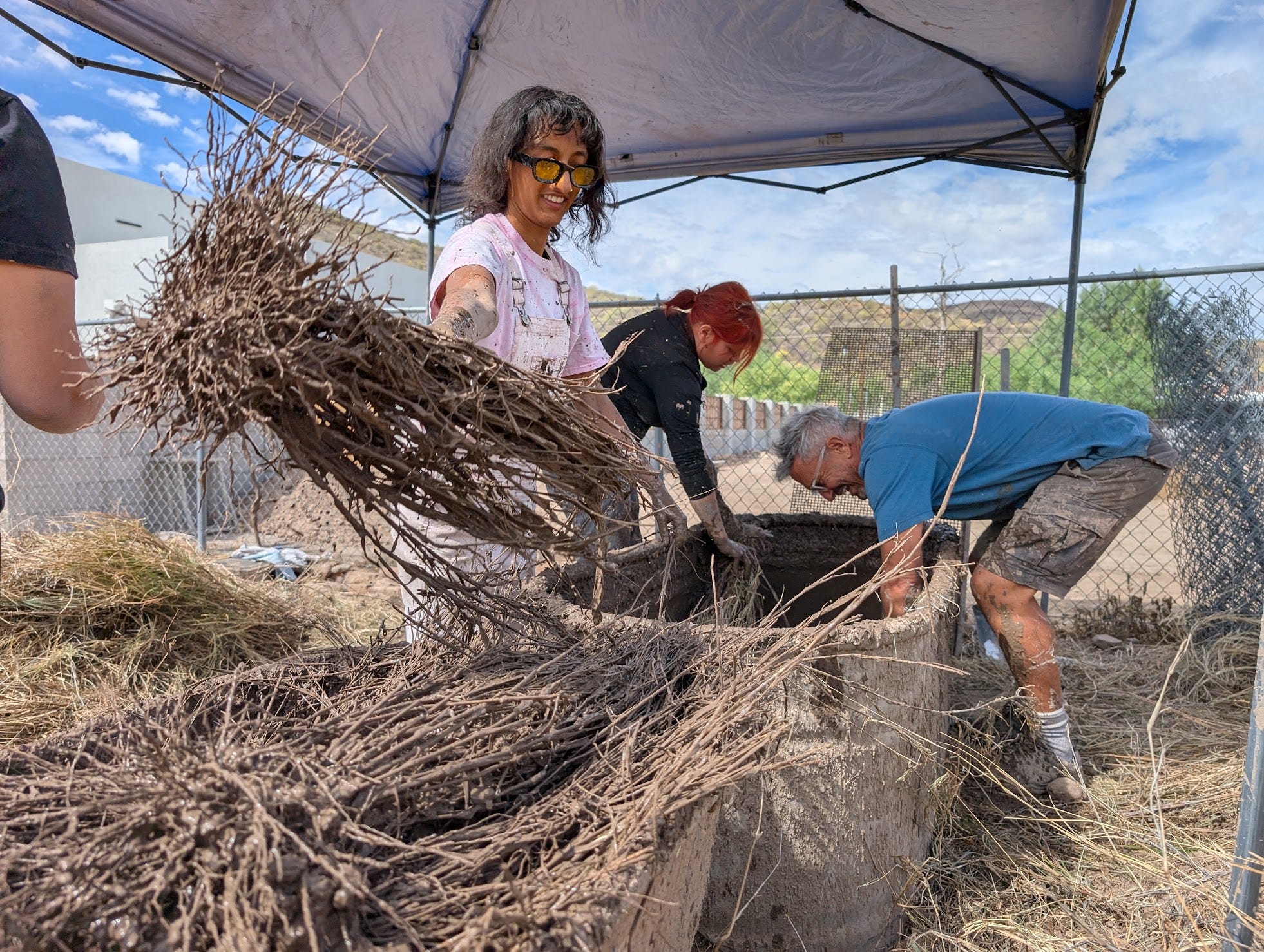
Then one day I wondered why I was chopping it up. I came up with a formula: coat each plant in a slip of clay so that all viable seeds get wet and germinate and die, and then put on some thicker adobe — a mixture of the dirt at our feet and maybe some sand, so it won't shrink as much — and finally put it into a mold, or directly onto a wall.
The buffelgrass adds tensile strength to the adobe: if you were to stand on a regular brick held up at both ends, it would break. These bricks don’t. They also resist erosion without any additives.
I built my first buffelgrass adobe structure 22 years ago, and it’s still my favorite place to sleep. It stays cool in the summer and warm in the winter — which is why people have built this way for millennia. Casa Grande has walls two or three feet thick for that reason.
Kimi
In the short documentary about your project, Jesús García talks about how adobe has been used here forever, but has now become a kind of luxury material for people with lots of money. How did you get the idea that adobe could be once again used by anyone?
David
What makes all these high-end adobe houses so expensive, besides being too big, is that building them involves lots of labor. But the materials you buy in a store involve just as much labor — you just can’t see it, or the ecosystems it’s destroying.
I was building a little studio for a friend and I had a kind of vision: why should anyone have to be homeless when we have this incredible building material at our feet, and this invasive grass that’s choking out our desert, and a lot of idle hands?
Right here, for thousands of years people have used the soil to make houses for themselves and each other. That community model still exists in many places, and we can use it here once again, maybe with an expanded definition of “community.”
Kimi
You recently started to collaborate with our friend Jacques Servin, and co-taught a class in the U of A art department. Can you talk about that collaboration? From the outside it looks like it took the backyard project and the work you've been doing for so long, and turned into something that now has a logo and a name.
David
Yeah, I told Jacques about my idea, and he really liked it. The UA Art Department asked him to teach a class, and Jacques told them he wanted to teach buffelgrass-adobe construction. They agreed, so we had a dozen art and architecture majors helping who helped to set up our brickyard at Mission Garden and run weekly community workshops there. Some of them got a grant to build a play structure on campus, that’s now underway.
And some of the students designed ADUs [auxiliary dwelling units]. The city is really trying to encourage ADUs, so that we get more density in our housing stock, but it’s been slow, because regular ADUs are pretty expensive to build. So we’ve got a program to help homeowners build them for cheap, in exchange for which they’ll house formerly unhoused people for a few years, for subsidized rent from the city.
We’re still figuring out all the details, but several homeowners have approached us, and we’re about to start on our first one. And the city has said that as long as we can get a plan approved by an engineer, they can include it in the city’s ADU model plan library.
Kimi
That could change the face of Tucson!
David
Right over there is a buffelgrass adobe stage where high school kids have been recording people’s stories about using adobe, themselves or a generation or two ago. Last year we got 60 stories, a lot from that old barrio.
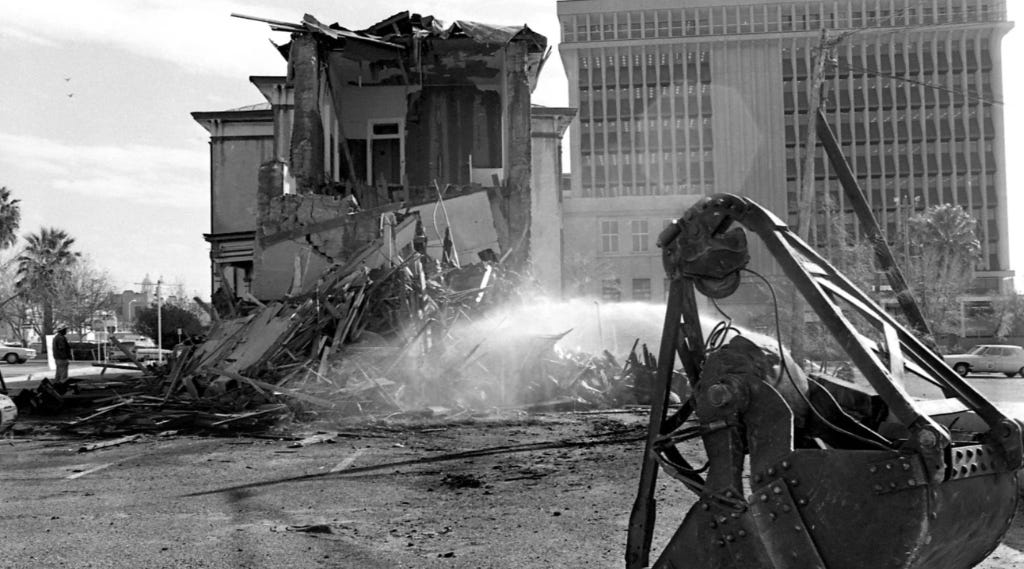
The city knocked down so many beautiful adobe houses to make the convention center, in what they called “urban renewal.” Twenty years later realized they’d destroyed a huge chunk of what made Tucson special. This can be a way to remedy some of that damage.
Kimi
For people who want to pull buffelgrass themselves, is there a particular way you need to do it?
David
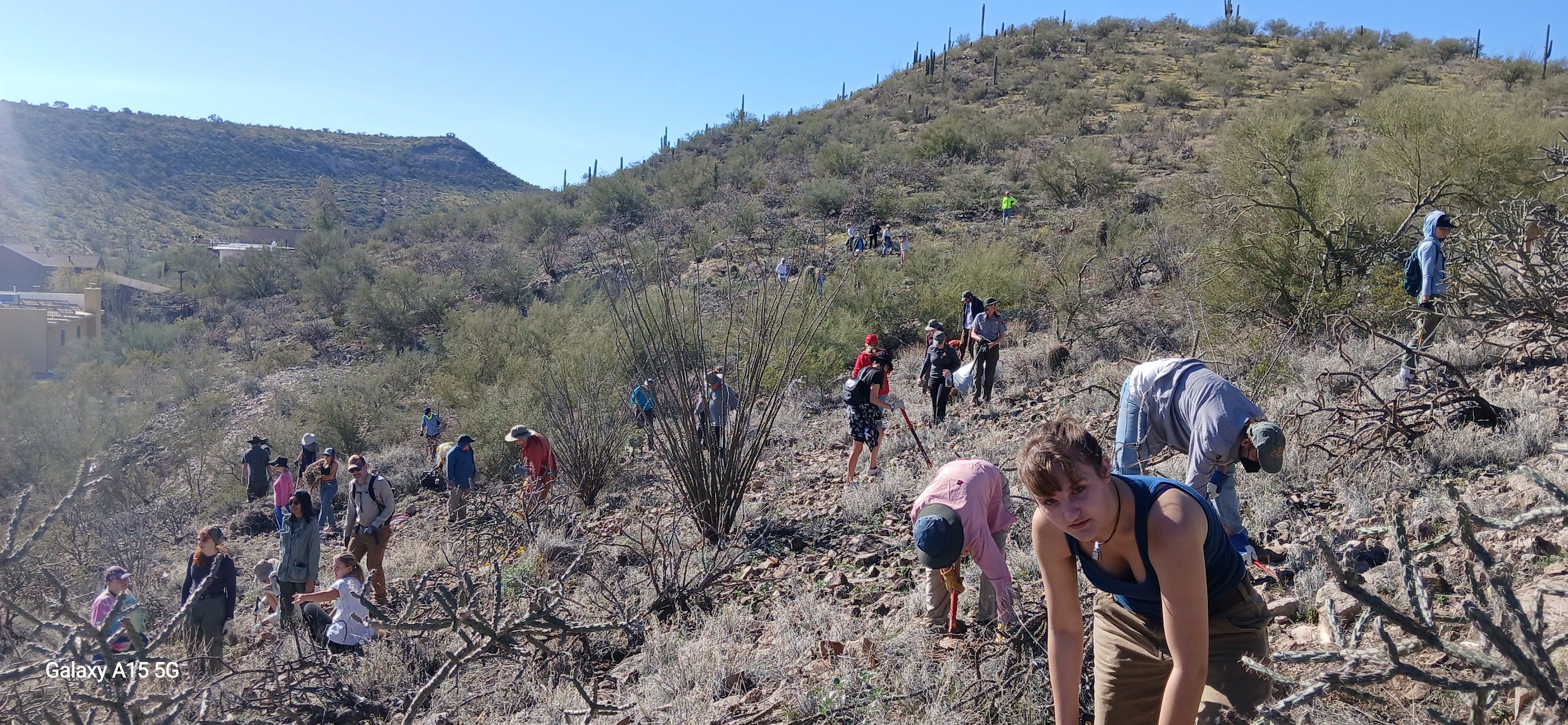
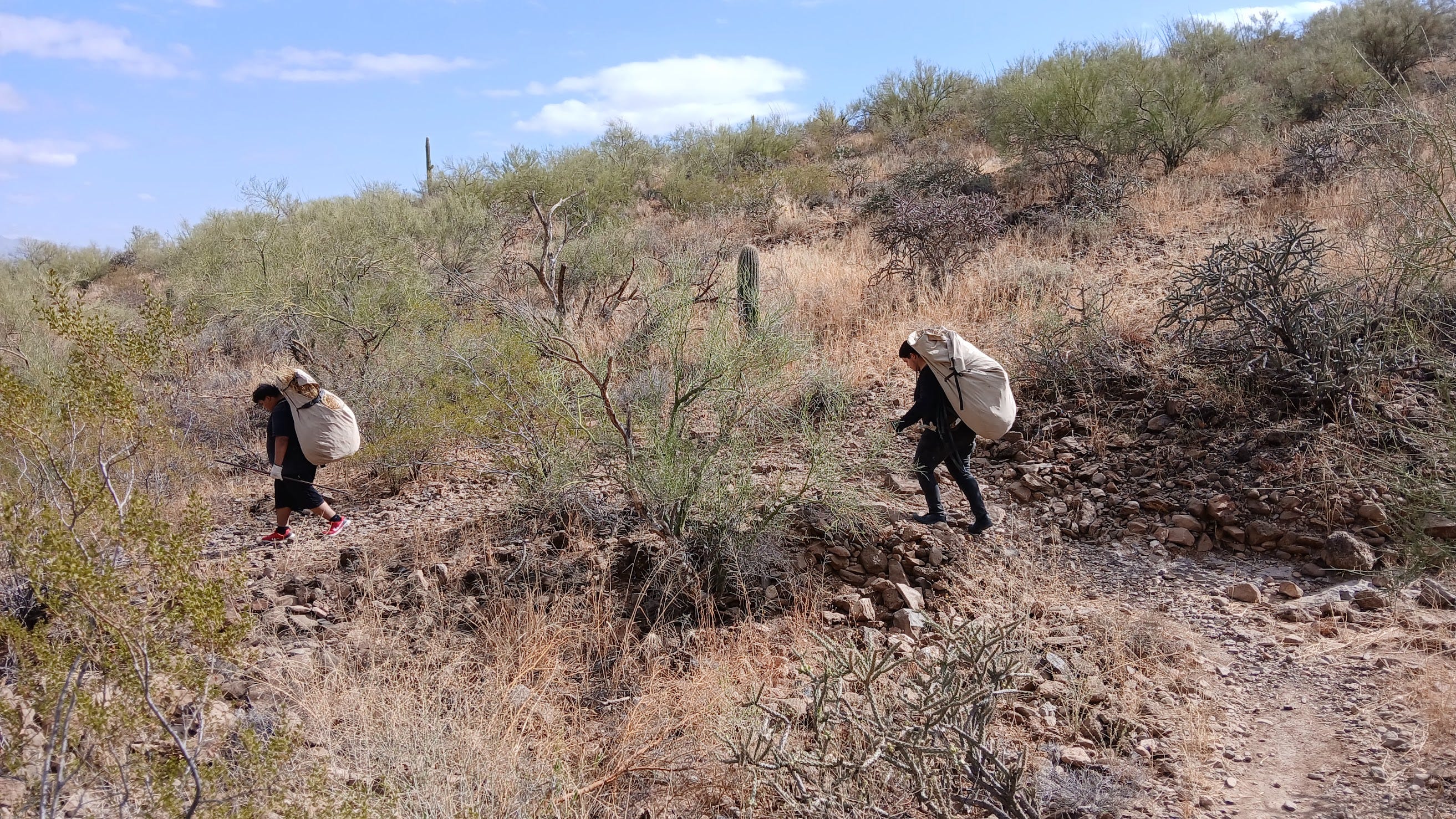
To prevent regrowth you have to remove the whole root ball. This is best done with a hand pick, or for bigger plants you can use a digging bar to pry out the root ball as someone else pulls. It’s easy once you get the hang of it, and very satisfying when you realize you’re helping other plants thrive.
Four of us were up in the Tucson Mountains today, and in half an hour we cleared a 40 by 40 foot field. And we checked some pulled areas for new growth, to get seedlings before they produce their own seeds.
Kimi
You’ve worked with a lot of young people.
David
Just like Earth isn’t being utilized like it used to be, youth aren’t really engaged as much as they used to be. The jobs that teenagers used to do are quite often taken by older adults that need work.
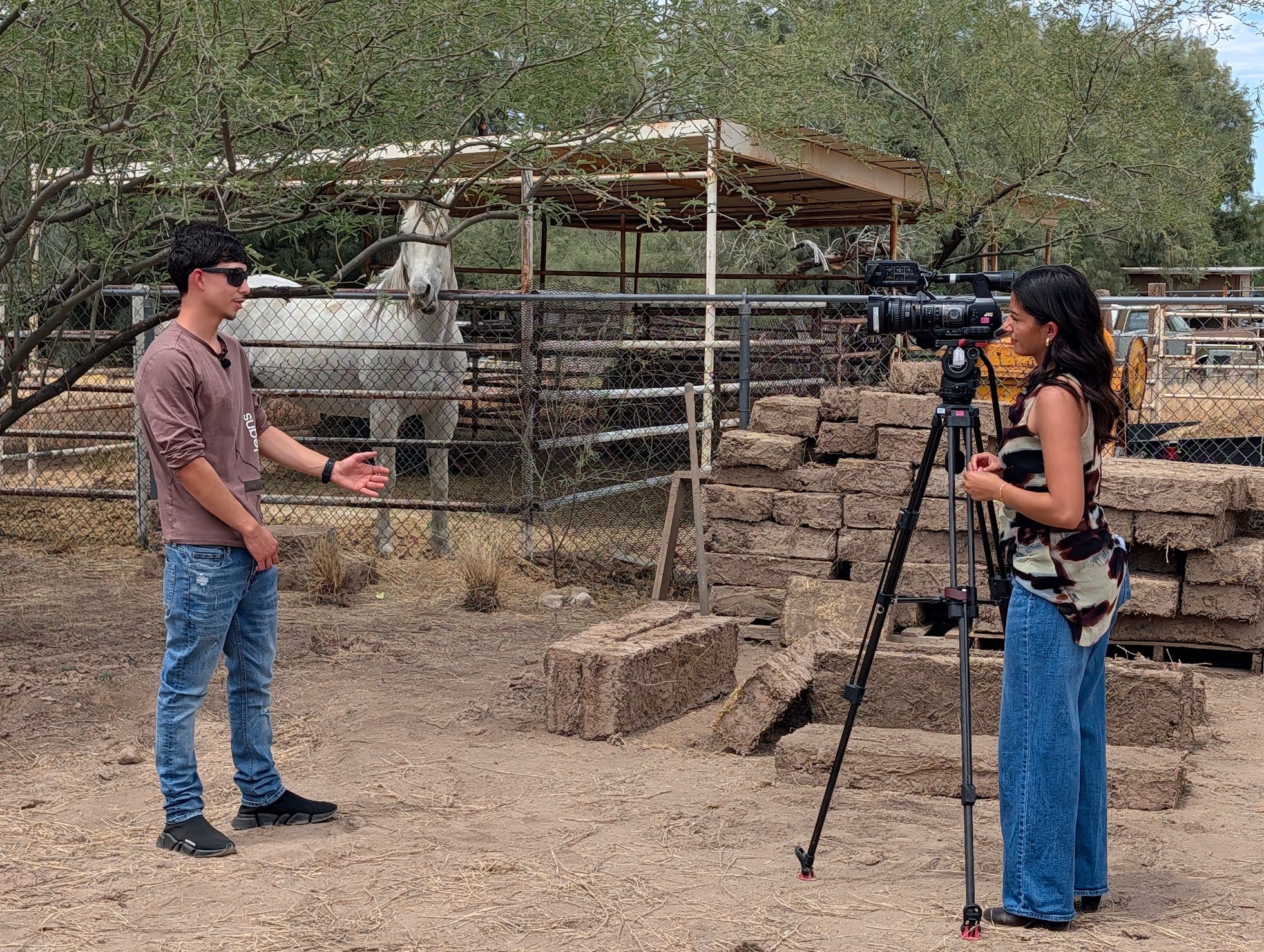
I work with Nosotros Academy. We pick buffelgrass, we go down to the river and collect sand, and we learn about the 4000 years of history right at our feet, and learn about how people built houses then and how they used what was around them to build with. And then we get building ourselves.
Kimi
This is such a great story: someone in the community has a passion, sees a problem, and has an idea. He’s friendly and approachable, believes in the power of community, and so the idea seeds and spreads, until now we have a buffelgrass-adobe brickyard across from Mission Garden where anybody can go and make bricks, and from there build a home.
Let’s see if anyone here has any questions.
[Kimi repeats audience question:] What about rain?
David
There’s a saying: adobe needs a good pair of boots and a good hat. As long as you keep it out of standing water and protect it from splashing rain at the base, with rock or whatever, and as long as you you put a nice eave over the walls, it's protected.
Even without those eaves — there's a lot of examples of houses that don't have eaves but survive for hundreds of years, if not longer, and because there's an annual ritual of replastering the surface, replacing the clay that might have sloughed off. Maybe in the process they embellish it with differently colored clays and cool patterns.
That’s the way it used to work here. Anyone, even children, can do the maintenance adobe houses require, which isn’t the case with modern construction. It’s fun and community-building.
Kimi
[Repeats audience question:] He’s heard that if you’re going to build an adobe house on your property, the only way you can get a permit is if you stabilize it with concrete or asphalt, which defeats the purpose of building with natural materials. Should he build without a permit?
David
The Tucson building department is very open to ways to alleviate the housing crisis. And they know the code is a work in progress.
Our cob — monolithic adobe, where you just pack it directly onto the wall when it’s wet — is already within the building code, so we can already build that way perfectly legally.
As for our bricks, they’re about 50 times more massive than regular bricks and have tensile strength because of the grass, so they’re a very different animal — a lot more like cob. And while regular adobe bricks use concrete or asphalt to “stabilize” them against rain, buffelgrass also “stabilizes” this stuff: some of the surface erodes, but the grass stops that after a few millimeters. You can see an example of that in a ramada roof right there in Mission Garden, that I built — most of the roof is eroded, but the buffelgrass part isn’t.
The city code people know all this and they’re very willing to help us jump through the right hoops to get these bricks into the code. There are often good reasons that building codes exist, but codes can be changed and we don’t mind jumping a bit to make that happen.
Kimi
So how do people get involved?
David
Every Saturday morning we have a workshop at our brickyard on the north side of Mission Garden. We generally start at seven, though as it gets cooler we’ll start a little later — you can sign up on our volunteer list to get updates.
We pick buffelgrass in the area for an hour, then we go back to the yard and make bricks with grass that’s been drying from the previous two weeks or more. We only spend a couple hours making bricks, then we have food. It’s family-friendly. It’s friend-friendly. You can bring anyone who wants to get their hands dirty.
This interview was recorded at Tucson Meet Yourself on Oct. 17, 2026 by David Fenster. The above transcript has been condensed and edited from the original.
David's work-- be it with kids and bikes or with bufflegrass and housing is a life affirming and positive balm to these dark times!